Singapore · 2001–2014 · Co-author with Farheen Mukri (FirstFern), supported by Young AMP’s Project ME: Muslims and environment initiative
Before ESG became part of the corporate lexicon, a small group of practitioners in Singapore were already examining what environmental responsibility looked like through the lens of faith. The work began at the first Faith and Nature workshop in 2001 and culminated, more than a decade later, in the publication of Faith and Nature: An Eco-Guide to Greening Faith Communities, launched by Young AMP in February 2014.
Purpose of the guide
The eco-guide bridges environmental ethics and operational practice. It draws out the principles of stewardship, interdependence and restraint embedded in the world’s major religions, and translates them into a practical toolkit for faith-based organisations. The guide includes self-assessment checklists covering energy, water and paper use, catering, procurement, transport and premises management — enabling places of worship, religious schools and community groups to audit their current practices and identify clear actions for reducing their environmental footprint.
My contribution
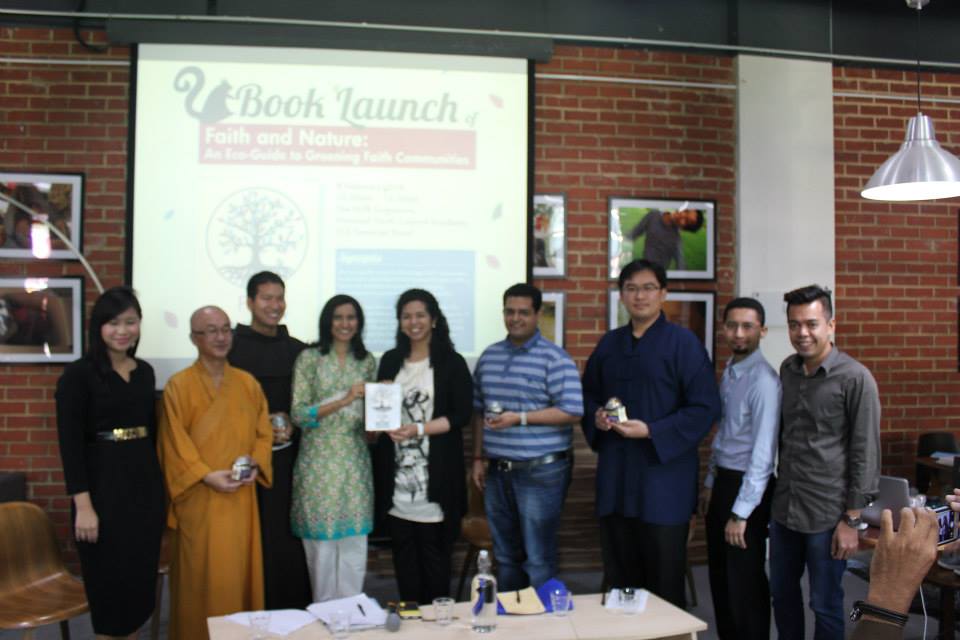
I co-authored the guide with Farheen Mukri of FirstFern Training and Consultancy, drawing on the deliberations of the 2001 workshop and on my doctoral research into Islamic environmental initiatives. At the launch, I moderated an inter-faith panel featuring Brother Esmond Chua (Order of the Friars Minor), Venerable Seck Kwang Phing (Singapore Buddhist Federation), Master Chung Kwang Tong (Taoist Federation Youth Group) and Mr Vivek Kumra (Hindu Endowments Board). The discussion surfaced significant common ground across traditions on questions of ecological responsibility, intergenerational duty and the role of youth in driving change.
Reach and reflection
A copy of the eco-guide was subsequently shared with the Vatican through the Franciscan order in Singapore — a quiet but meaningful indication of how locally produced, community-grounded work can find resonance well beyond its original audience.
The project also shaped how I approach my work today. Technical and policy solutions are necessary but rarely sufficient on their own; the more demanding task is translating shared values into practical steps that organisations and communities will adopt and sustain. That translation work — across sectors, cultures and disciplines — has remained a through-line in my practice, from digital inclusion and climate adaptation to ESG advisory.
A demonstration that on some issues, different religions can be more similar than they are different.”
Chong Kwek Yang, Research Fellow, Department of Biological Sciences, National University of Singapore
An admirable practical step… the practical tables it offers for self-assessment can aid communities in developing a practical response to the environmental crisis.
Munjed M. Murad, Green Muslims, Washington DC Chapter
Your efforts have blossomed into an ecological and environmental guide that will go a long way for Faith and Nature initiatives in Singapore.
Sister Mary Elizabeth Lim, Religious of the Good Shepherd; Council Member, Pontifical Council for the Promotion of Christian Unity



Leave a Reply